RALEIGH - As construction continues on the Complete 540 Phase 2 Extension of the Triangle Expressway, the North Carolina Turnpike Authority (NCTA) and its project partners are finding innovative ways to reduce impacts on drivers while delivering one of the state's largest transportation projects.
Through collaborative planning and creative engineering solutions, the project team has identified opportunities to shorten road closures, reduce traffic disruptions and keep people moving.
Shortening the Closure of East Garner Road
East Garner Road is a key east-west corridor in southern Wake County, connecting residents, businesses, schools and emergency services in a rapidly growing area near Garner. Project construction required building new bridges crossing over East Garner Road and the adjacent railroad corridor. Request for Proposals (RFP) allowed a 180-day closure of the roadway, which would have created a significant disruption for the thousands of drivers who rely on the corridor each day.
Rather than accepting a six-month closure, an innovative alternative was proposed that combined multiple bridge structures into three bridge crossings over both East Garner Road and the railroad. This solution reduced the closure from 180 days to just 45 days, cutting the impact by 75 percent while still meeting all design and safety requirements. The alternative design also minimized earthwork requirements, accommodated future roadway improvements and reduced the number of bridges needed for the crossing, further reducing construction impacts to drivers and the surrounding community. The team achieved the reduced closure time despite weather challenges which included more than 10 days of rainfall during the closure period and reopened the roadway ahead of key back-to-school traffic demands. For families, school buses, emergency responders and local businesses that depend on East Garner Road, the shortened closure meant a faster return to normal travel patterns and fewer weeks of detours.
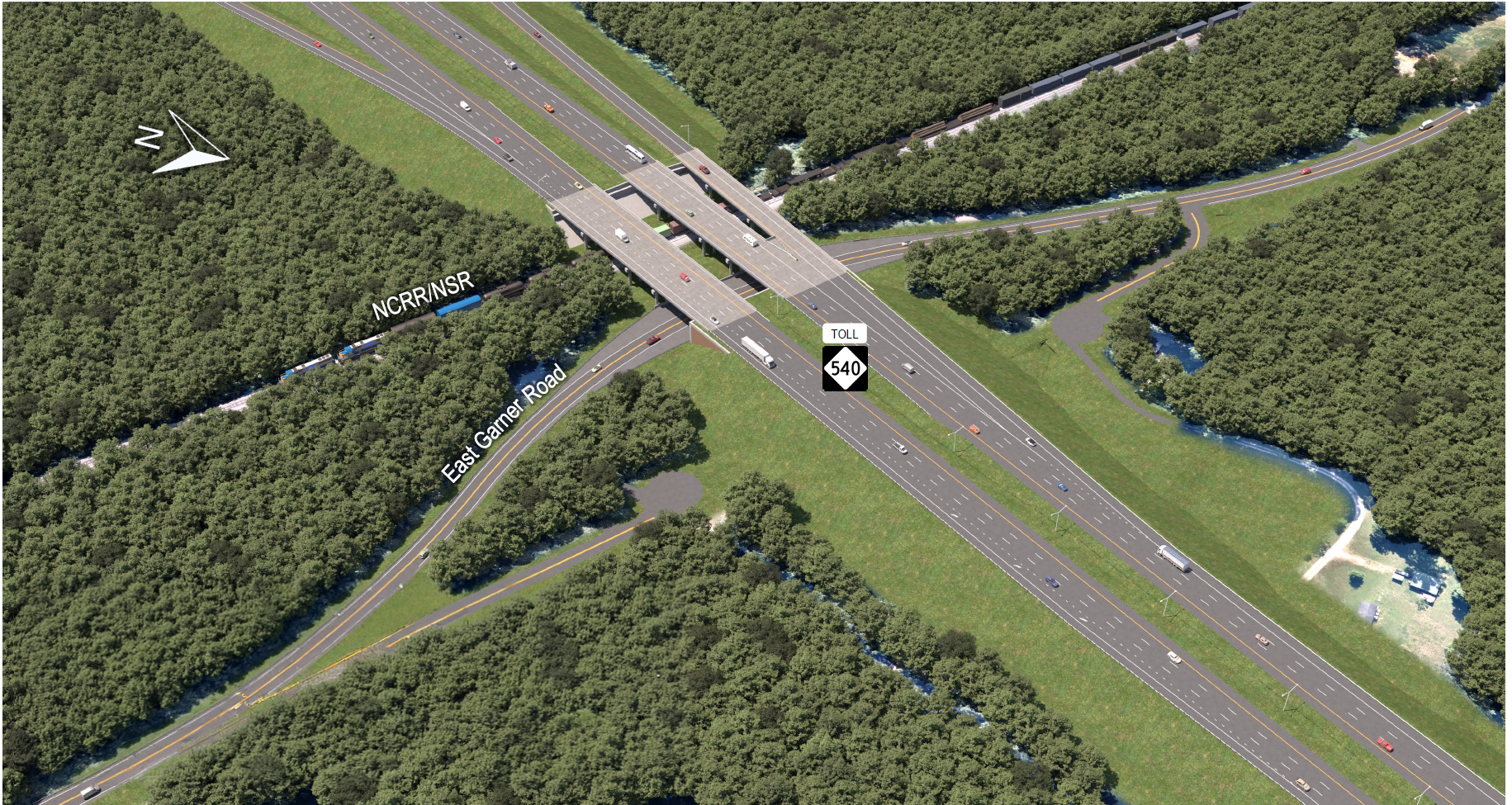 Rendering of the innovative bridge design that allowed the Complete 540 project to reduce the East Garner Road closure from 180 days to 45 days while maintaining safety and design requirements.
"Large infrastructure projects inevitably create temporary inconveniences, but our goal is to minimize those impacts whenever possible," said NCTA’s Eastern Deputy Chief Engineer, Cameron Richards. "The team continuously looks for innovative construction approaches that allow us to maintain mobility, improve safety and deliver long-term transportation benefits with as little disruption as possible. Every day we can save on a closure or avoid a detour is time returned to the communities and drivers who rely on these roadways."
Saving Drivers Time at the I-540 and I-87 Interchange
As part of completing the I-540 and I-87 interchange connections associated with the Complete 540 Phase 2 project, the RFP allowed for a 56-hour closure and detour to modify the existing loop ramp from I-540 westbound to I-87 northbound.
Instead, the contractor will implement a temporary traffic pattern that will move the traffic off the existing loop ramp and allow crews to construct the loop ramp improvements without the planned 56-hour closure and detour, helping drivers avoid traffic disruption.
The implementation of the temporary traffic pattern will also improve safety for construction crews and maintain mobility through one of eastern Wake County's busiest transportation corridors.
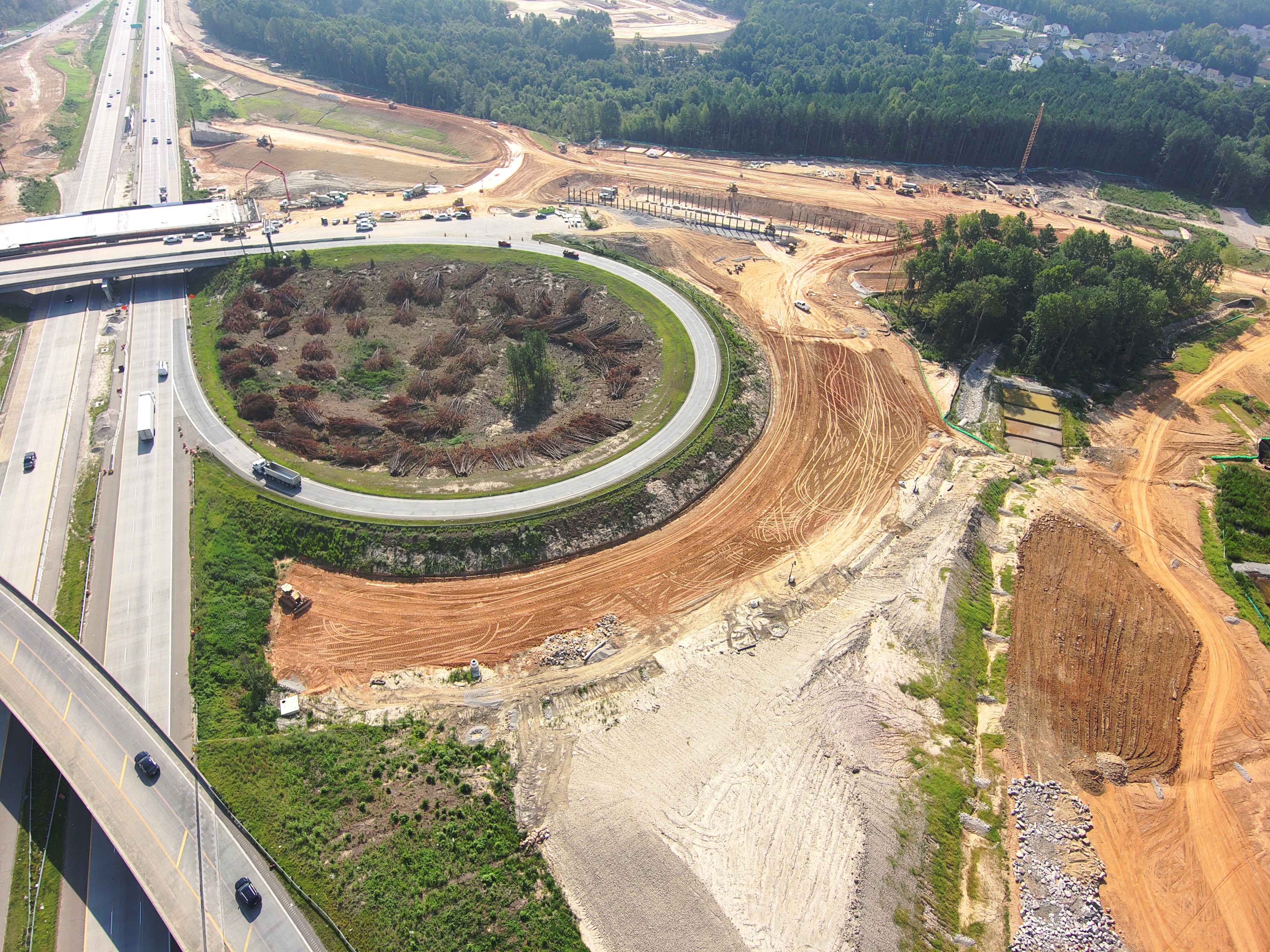 Construction of the loop ramp improvements at the I-540 and I-87 interchange in Knightdale.
The Complete 540 Phase 2 Extension of the Triangle Expressway demonstrates how engineering innovation can provide tangible benefits to drivers before a project is completed. By reducing closure durations, eliminating detours and maintaining traffic flow during construction, the project is helping communities stay connected and supporting access to jobs, schools and local businesses while building critical transportation infrastructure for the region's future. The project remains on schedule to open in late 2028.