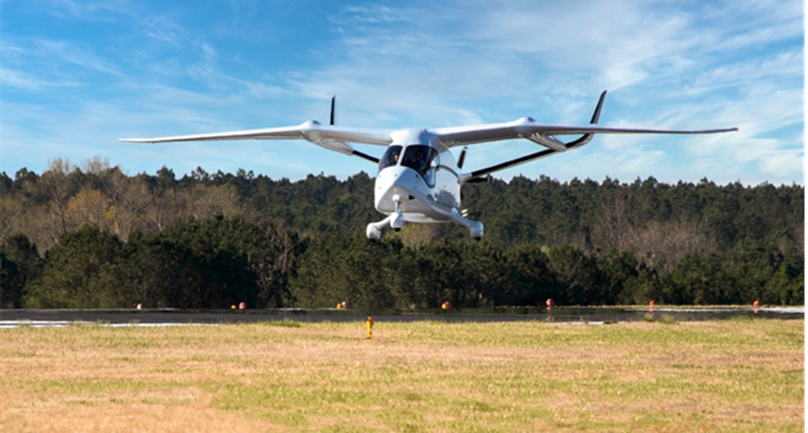
Advanced Air Mobility aircraft can take off and land vertically, on short runways, or on conventional runways, allowing them to operate in diverse environments and serve varied community needs. Most current models are electric, though some use alternative fuels. They may be human-piloted, remotely piloted, or automated, and require both physical and digital infrastructure for safe, efficient operations.Advanced Air Mobility aircraft are commonly grouped into three categories that reflect how and where these aircraft operate:
Uncrewed Aircraft Systems (UAS)
Systems that enable the operation of uncrewed aerial vehicles, or UAV, , commonly referred to as drones. This includes aircraft, ground control stations, communication links, and supporting technologies used for cargo delivery, public services, infrastructure inspection and data collection.
Urban Air Mobility (UAM)
The transport of passengers or cargo within urban areas using vertical takeoff and landing or short takeoff and landing aircraft. These electric or alternative fuel systems help bypass traffic congestion and improve access to jobs, services, and destinations.
Regional Air Mobility (RAM)
The movement of passengers and cargo between rural communities, small towns and regional centers using vertical, short or conventional takeoff and landing aircraft. Regional Air Mobility expands access to major transportation hubs and essential services, improving regional connectivity and mobility.
The 5 Core Pillars
To ensure these aircraft technologies are introduced safely, responsibly, and in alignment with statewide mobility goals, the N.C. Department of Transportation's Division of Aviation has established five core pillars to guide the advancement of Advanced Air Mobility.
Regulatory Alignment
Establish clear, consistent regulatory processes and guidance to safely integrate Advanced Air Mobility technologies.
Technology Readiness
Assess infrastructure, energy, airport and technology needs to understand what is required for AAM operations.
Stakeholder Engagement
Engage communities, partners and stakeholders to foster shared understanding and transparent communication through Advanced Air Mobility development.
Workforce Development
Identify future workforce needs and promote pathways that connect students, workers and institutions to emerging Advanced Air Mobility careers across North Carolina.
Strategic Funding
Position North Carolina to pursue and secure grants and investments that enable Advanced Air Mobility planning, infrastructure and innovation across the state.