skip to main
Close Menu

Electric Logistics & Integrated Flight Testing (eLIFT-NC)

​​​​​​​​​​

​​Electric Logistics and Integrated Flight Testing is the N.C. Department of Transportation's initiative to establish a statewide aviation network that connects airports, hospitals and rural communities to transform how healthcare access and disaster response is received and delivered.
 

The eLIFT-NC initiative was selected to participate in the Federal Aviation Administration's Electric Vertical Take-off and Landing Integrated Pilot Program, which aims to integrate Advanced Air Mobility technology into the National Air Space System. Advanced Air Mobility technology will help shorten emergency response time and move equipment, clinical teams and patients more efficiently. 

eLIFT-NC will work to improve disaster response efforts, using Advanced Air Mobility technology to deliver resources and support rescue efforts.

Potential Use Cases 

Medical Logistics Network 

Move critical medical supplies, dialysis materials, medication and cancer treatment supplies between healthcare hubs and rural facilities. 

Patient Rideshare Programs 

Provide air transportation for patients to access specialty care, dialysis and cancer treatments in major care centers. 

Disaster Response & Recovery 

Deliver critical supplies, blood products and medical equipment to disaster impacted areas when roads are blocked or flooded. 

Hospital at Home 

Enable home care services with lab sample pickup, prescription delivery and remote monitoring to improve outcomes and reduce travel barriers. 

Air Ambulance 

Electric air ambulance operations with integrated command and control, vertiport (a station for aircraft to take off and land straight up) network and real-time data for safe and scalable operations statewide.

Partners

The partners are working closely with NCDOT to provide all major phases of the e-LIFT-NC initiative, including relevant use cases, existing challenges, flight operations and experimental aircraft. The core partners are: 

  • BETA Technologies
  • Joby Aviation
  • UNC Health​
  • WakeMed
  • ECU Health​

Frequently Asked Questions

Expand All
Collapse All
  • What are the different types of aircraft?

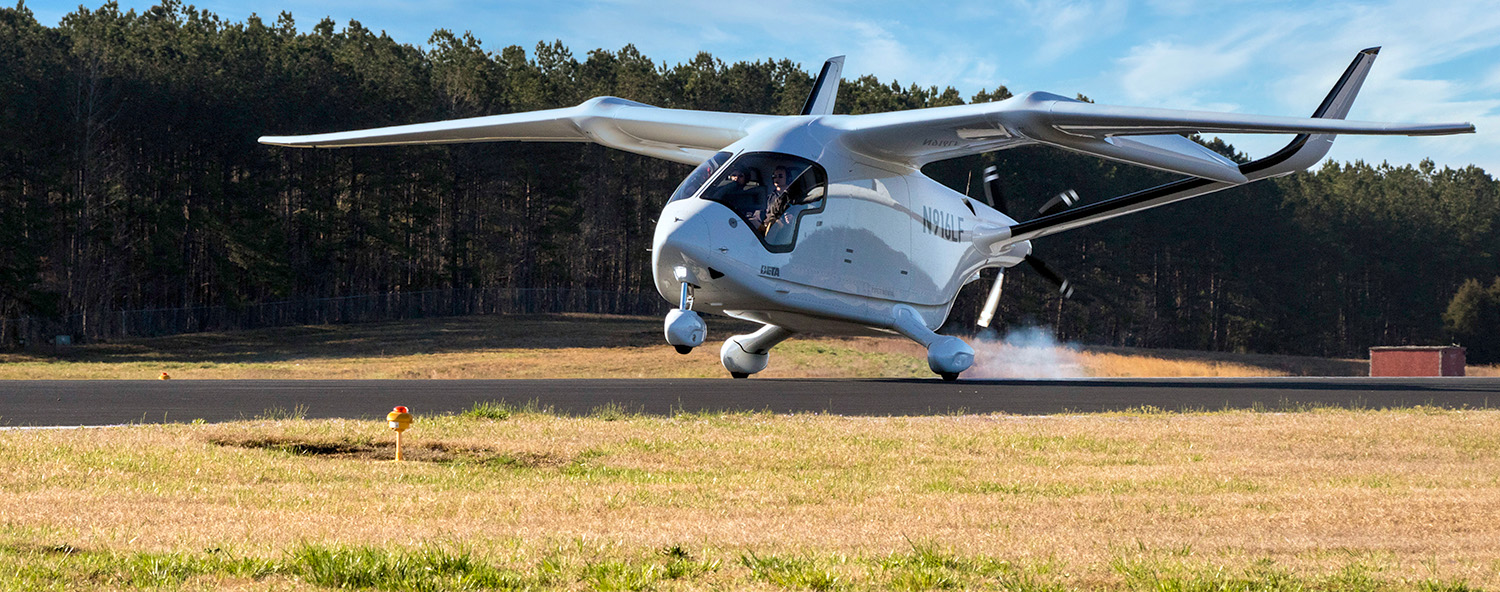
    ​The eLIFT-NC program will use Conventional Take-off and Landing in the first phase and move to Vertical Take-Off and Landing in later phases. The two aircraft that will be flown in Phase 1 of the eLIFT-NC program are the Joby J208 CTOL and BETA CX300 eCTOL aircraft. ​

  • How are these aircraft different from drones?

    ​Unlike drones, which are autonomous aircraft flown by an individual on the ground, this program will evaluate the use of full-size aircraft that can carry a pilot and other passengers or supplies. All aircraft used during eLIFT-NC operations will have a licensed pilot inside the aircraft. ​

  • Are these aircraft certified by the Federal Aviation Administration?

    ​Each aircraft company will perform independent FAA-approved operational procedures. In 2024, the FAA issued a final powered-lift rule to address qualifications, training and operating requirements for power-lifted aircraft. The eLIFT-NC program is being used to inform the FAA and the U.S. Department of Transportation for new rulemaking and policies. Each aircraft manufacturer is pursuing aircraft type certification and are currently operating under experimental airworthiness approvals in direct coordination with FAA. ​

  • Are these aircraft safe?

    ​The FAA and NCDOT treat the operations of Advance Air Mobility aircraft the same as conventional aircraft. They require the same level of safety, security and training to operate. All operations performed in the eLIFT-NC program will have FAA approval. Both aircraft used in Phase 1 have flown thousands of hours across numerous test campaigns and cross-country trips. ​

  • What role do healthcare partners play in eLIFT-NC?

    ​Our healthcare partners help identify relevant use cases, existing challenges and existing and projected needs. They will evaluate the flight operations, program assumptions and readiness to ensure the aircraft are practical for healthcare operations across the state and country. ​

  • Can the aircraft fly in bad weather?

    ​Each aircraft has independent weather capabilities and can fly in most weather conditions. In case of bad weather for eLIFT-NC events, the flight activity schedules may be adjusted. ​

  • Are pilots required?

    ​Yes, eLIFT-NC requires pilot operations and, for automation-enabled activities, human oversight and FAA-approved constraints. Once the aircraft are certified, it is anticipated that non-piloted aircraft will be allowed to operate. ​

  • How will community concerns about noise, routes, and visibility be addressed?

    ​As part of this program, NCDOT is studying how noise and other environmental factors may be impacted. Additionally, the FAA evaluates environmental and community impacts of infrastructure and other improvements under its jurisdiction as part of the National Environmental Policy Act. This evaluation will help inform FAA rulemaking for future technologies. Community feedback during the evaluation can be provided to NCDOT. ​

  • Will the aircraft collect personal information from the public?

    ​No, cameras will not be used to identify people or personal data. ​

  • What infrastructure is needed for these aircraft?

    ​Aircraft that take-off and land with conventional systems can use existing airports. Aircraft that take-off and land vertically may be able to use existing helipads. New airports and helipads may need charging stations, landing pads, ground handling equipment and safety systems.​

9/18/2026 3:29 PM